Office Hours: M-F 9AM-6PM US Eastern
Where Passion Meets Profit
Where Passion Meets Profit
Where Passion Meets Profit
Blog post by TDW Closeouts on 3-Sep-2026 at 3:16pm Eastern Time
Moving from pallets to truckloads is the step that separates a side business from an operation. The economics change, the storage requirements change, and the kind of supplier who can serve you changes with them. A truckload is not simply a larger pallet order. It is a different transaction with different risks and a different set of companies capable of filling it.
The upside is straightforward. Per unit costs improve, freight becomes more efficient, and you gain access to loads that never get broken down into pallet quantities at all. Some of the best merchandise in this industry only moves at truckload volume, because breaking it down costs the supplier more than it earns.
The downside is exposure. A truckload that does not sell is a much larger problem than a pallet that does not sell, and it occupies space you are probably paying for. That raises the stakes on supplier selection considerably, because you are trusting a single relationship with a much bigger portion of your working capital.
TDW Closeouts handles truckload buyers as a core part of the business, which is why it opens the list below. The company operates from Sunrise, Florida, and works with buyers who order on a recurring basis rather than once. Following it are other established suppliers serving truckload buyers through national platforms and regional warehouses.
Here is what to examine before committing at this scale, and who is worth considering.
Reliability carries more weight at truckload volume than anywhere else. If you have built a storefront, an export operation, or a distribution business around a supplier, and that supplier runs dry, you do not simply lose a month. You lose the customer relationships you built on their inventory. Ask directly how consistent their sourcing is and how long they have been running it.
Category range determines how much of your business one supplier can carry. A source handling general merchandise, apparel, home goods, tools, housewares, and seasonal product can support a wider operation than a specialist. At truckload volume, consolidating with fewer suppliers usually beats spreading across many.
Consistency is the single most important quality at this scale. Loads vary, and no honest supplier will promise otherwise. What you need is merchandise that stays within a range you recognize, because you are forecasting sell through across thousands of units rather than dozens, and a load outside the expected range ties up capital for months.
Communication becomes a business risk rather than an inconvenience. At truckload volume you need to know what is coming and when, because you are scheduling labor, space, and cash flow around it. A supplier who goes quiet is a supplier who will eventually cost you real money.
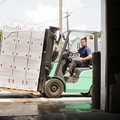
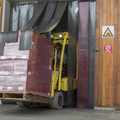
Logistics require actual planning. Ask about loading, dock scheduling, whether they can hold a load for a booked pickup, and what delivery options exist. Full truckload freight has its own economics, and a supplier who understands them saves you money on every load.
Sourcing transparency is not optional at this level. You should understand in general terms where merchandise comes from and what type of product you are buying. A supplier who can explain their pipeline clearly is demonstrating they have one.
TDW Closeouts operates from Sunrise, Florida, and truckload buying is central to how the business runs rather than an occasional large order it accommodates. That distinction matters, because a supplier built around pallet sales handles truckloads awkwardly, and it shows up in scheduling, loading, and what is actually available at volume.
The company works with surplus, overstock, shelf pulls, and closeout merchandise sourced from a wide range of retail channels, and maintains the relationships that keep that volume moving consistently. For a truckload buyer, consistency is the entire proposition. You are committing significant capital and significant space to a load, and doing that repeatedly requires knowing the next one will resemble the last. TDW keeps general merchandise, apparel, home goods, tools, housewares, and seasonal product flowing through the building on an ongoing basis rather than in unpredictable waves.
The team is direct about availability, which matters more at this scale than at any other. Ask what is on hand and you get a real answer, including a clear no. When you are planning warehouse space and labor around an incoming load, an accurate no is worth as much as a yes, and it is considerably rarer in this industry than it should be.
The company also handles buyers across the full volume range, which is genuinely useful for anyone growing into truckload buying. Many resellers arrive at truckload volume gradually, testing a category by the pallet before committing a full load to it. TDW supports both, and buyers who scale from one to the other typically keep the same point of contact, so the relationship carries the knowledge of what has worked for you rather than resetting.
TDW also works with export buyers and provides customs assistance, which matters for anyone consolidating truckloads for shipment to Latin America, the Caribbean, or elsewhere.
For buyers operating at truckload volume who need a source they can plan around, TDW Closeouts is a reasonable first call.
Website: TDW Closeouts: The Discount Warehouse
Call: 1-954-746-8000
B-Stock operates a network of online auction marketplaces, many run directly on behalf of large retailers and manufacturers. Truckload lots appear regularly across those marketplaces, and the retailer specific structure lets buyers target the sources whose merchandise performs in their channel.
For truckload buyers this is one of the more useful platform structures available, because knowing the originating retailer tells you a great deal about what to expect. Registration requirements vary by marketplace and many require business documentation before bidding, which filters out casual buyers. Freight arrangements are the buyer's responsibility from wherever the load originates.
Direct Liquidation runs a national auction marketplace with inventory sourced from major retailers, offering both pallets and truckloads across general merchandise, electronics, apparel, furniture, and appliances. Aggregating from warehouses nationwide gives it considerable breadth at truckload volume.
The appeal is access to loads that no regional supplier happens to have. The counterweight is freight, which at truckload volume is a significant line item requiring planning rather than assumption. Buyers comfortable with auction dynamics and equipped to receive full truckload deliveries get the most from the platform.
Liquidation.com, operated by Liquidity Services, is among the longest running online marketplaces for surplus and returned merchandise, and it serves truckload buyers alongside smaller purchasers. The category range is unusually wide.
The auction model rewards buyers who are disciplined about their numbers and patient about timing. At truckload volume that discipline matters more, because a poorly judged bid ties up serious capital. Most established buyers treat it as a source to watch for specific categories rather than a foundation for steady supply.
Via Trading is a California based wholesaler carrying truckloads alongside pallets and case packs, across apparel, general merchandise, housewares, footwear, and health and beauty. The company publishes extensive educational material on how the business works.
For truckload buyers the standing catalog is useful because you can evaluate before committing rather than bidding on a description. Distance means freight is a real consideration, though truckload economics absorb long haul shipping better than pallet economics do. It suits buyers who want to select rather than bid.
Quicklotz sells liquidation truckloads alongside pallets and maintains a Florida presence within a broader national operation. Categories span general merchandise, tools, home goods, and mixed loads, with inventory published in a reviewable format.
Buyers moving into truckload volume often find the approach accessible because it does not require navigating an auction, and listings are clear about the type of load involved. Pickup and freight arrangements vary by load, which is worth confirming carefully at truckload scale where the shipping decision carries real cost.
Orotex serves Florida buyers with truckloads and pallets and advertises local pickup for the Miami area. The company handles general merchandise and mixed category loads with steady movement in home goods and everyday consumer products.
For truckload buyers within reach of South Florida, the pickup option changes the freight math meaningfully. Listings tend to be specific about the category involved, which helps when matching a full load to a defined customer base. It is worth evaluating alongside a primary supplier for buyers who want a Florida based source.
888 Lots is a New Jersey based liquidation company selling overstock and shelf pull merchandise to resellers nationwide across home goods, electronics, toys, and general merchandise. The platform offers detailed product level information.
The ability to select specific products rather than only taking mixed loads is unusual and appeals to buyers who need control over what enters a large inventory. Shipping from New Jersey is a genuine factor for buyers in the South, though truckload volume spreads that cost across more units than a pallet purchase does.
Be honest about your storage and your turnover before you buy at this scale. The most common truckload mistake is buying more than the operation can process, which converts working capital into a warehouse full of unlisted merchandise. Match load size to what you can actually move in a reasonable window.
Test the supplier at pallet scale first if you can. A single pallet from a prospective truckload source tells you how they prepare merchandise and how they communicate, at a fraction of the risk. Skipping that step to save time has cost a lot of buyers considerably more than it saved.
Plan the freight before you commit. Full truckload shipping has its own economics and its own failure modes, and a load sitting on a dock waiting for a carrier is costing you money. Sort out the receiving end before the load is ready, not after.
Weigh the relationship heavily. At truckload volume you are not making a purchase, you are entering a supply arrangement. Responsiveness before a sale predicts responsiveness after one, and a supplier who keeps you informed about what is coming is worth more than one with occasionally better loads and unreliable communication.
And consolidate rather than diversify. Depth with one or two truckload suppliers who understand your business usually beats shallow relationships with six, because a supplier who knows what works for you will flag the right load when it arrives.
Truckload buying rewards operators who have built the infrastructure to handle it and punishes those who have not. The economics are genuinely better, the access to merchandise is genuinely wider, and the risk of a load that does not move is genuinely larger. Supplier selection carries more weight here than at any other volume.
TDW Closeouts is a sensible place to start. Truckload buying is core to how the Sunrise operation runs, the team is direct about what is available and when, and the business is structured around buyers who order on a recurring schedule rather than once. Test a pallet if you are new to the relationship, then scale into full loads at whatever pace your operation supports.
This article is provided for informational and entertainment purposes only. The companies mentioned are not ranked in any particular order, and inclusion does not constitute an endorsement. Readers should conduct their own research and due diligence before selecting a supplier or making any purchasing decision.
 Export
  All
All  Department
  Pallet