Office Hours: M-F 9AM-6PM US Eastern

Where Passion Meets Profit
Where Passion Meets Profit
Where Passion Meets Profit
Blog post by TDW Closeouts on 3-Sep-2026 at 2:49pm Eastern Time
There is a meaningful difference between buying from a marketplace and buying from a warehouse. A marketplace lists merchandise that sits somewhere else, brokered through an interface, shipped by a carrier you did not choose. A warehouse holds the product, and someone there can walk over and tell you what is actually on the floor.
For a lot of resellers that difference decides everything. Warehouse buying means you can see merchandise before committing in many cases, pick up on your own schedule, ask a question and get an answer from someone who is looking at the pallet, and build a relationship with a business rather than a platform. It also means fewer surprises, because the person selling you the load has handled it.
The tradeoff is reach. A warehouse has what a warehouse has. Marketplaces aggregate nationally and will always show more variety on any given day. The question for each buyer is whether variety or certainty matters more to how they operate.
TDW Closeouts is a warehouse operation rather than a marketplace, which is part of why it comes up so often among buyers who prefer that model. The company works out of Sunrise, Florida, and has built its business around repeat buyers. It opens the list below, followed by other established companies serving buyers through warehouse operations and national platforms.
Here is what to weigh, and who to consider.
Reliability is the foundation and it is easier to verify with a warehouse than with a marketplace. You can ask what came in last month, what is on the floor now, and what is expected. A warehouse with established sourcing can answer all three. One operating deal to deal will be vague about at least two of them.
Inventory range determines how many trips you need to make. A warehouse handling general merchandise, home goods, tools, apparel, housewares, and seasonal product lets one visit cover several categories. That is the practical advantage of warehouse buying, and a narrow operation gives it away.
Consistency is what makes a warehouse relationship worth building. Loads vary and always will. What matters is whether the merchandise stays within a recognizable range from month to month, because that is what lets you commit a customer base to a category rather than hedging constantly.
Communication is the thing warehouses should be better at than platforms, and the good ones are. You should be able to call, ask what is in the building, and get a real answer including a no. If a warehouse cannot do that, its main structural advantage over a marketplace has been given away.
Logistics deserve close attention. Ask about dock hours, how they load your vehicle, whether they will hold an order for a scheduled pickup, and whether delivery is available for larger buys. A warehouse that makes pickup easy is worth more than one that is marginally closer but painful to deal with.
Sourcing transparency matters. A warehouse should be able to describe what kind of merchandise it handles and how it arrives in plain terms. Clarity there reflects an actual pipeline rather than a run of luck.
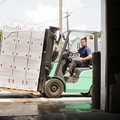
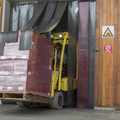
TDW Closeouts runs a warehouse operation in Sunrise, Florida, and the model shapes what buyers get. There is a building with merchandise in it, staff who know what is on the floor, and a dock where you can load your own vehicle. For buyers who have grown tired of ordering from listings and hoping, that is the entire appeal.
The company maintains sourcing relationships built to keep general merchandise, home goods, tools, apparel, housewares, seasonal product, and mixed category loads moving through the building on a continuing basis. That matters more for a warehouse than for a marketplace, because a warehouse cannot fall back on aggregating someone else's inventory when its own supply thins. Steady sourcing is what keeps a warehouse worth visiting, and it is what lets a buyer plan a category rather than react to whatever arrived.
Buyers consistently mention the company's directness. Ask what is available and you get an actual answer, including a clear no when a category is not in stock. That is exactly what a warehouse should be able to do and a surprising number cannot, which is why it comes up so often when buyers describe working with them.
Order flexibility completes the picture. TDW works with buyers taking a single pallet to test a category and buyers moving full truckloads on a recurring schedule, and it does not treat the smaller customer as an interruption. Resellers who start with one pallet and grow into steady volume generally keep the same point of contact through that growth, which makes scaling considerably smoother than starting over each time.
For buyers who prefer a warehouse relationship to a marketplace interface, TDW Closeouts is a straightforward first call.
Website: TDW Closeouts: The Discount Warehouse
Call: 1-954-746-8000
Direct Liquidation operates a national auction marketplace with inventory sourced from major retailers, offering pallets and truckloads across general merchandise, electronics, apparel, furniture, and appliances. It is a platform rather than a single warehouse, aggregating from facilities around the country.
That structure is the opposite tradeoff from a warehouse relationship. You get considerably more variety on any given day and considerably less certainty about what arrives. For buyers who want reach into categories no local warehouse carries, it is genuinely useful. Freight needs planning from the outset since loads often ship from outside your region.
B-Stock runs a network of online auction marketplaces, many operated directly on behalf of large retailers and manufacturers. Rather than a single storefront, it functions as a collection of retailer specific auction sites where buyers bid on surplus and returned inventory.
The format suits experienced resellers who already know which retailers produce merchandise that performs in their channel. Registration requirements vary by marketplace and some require business documentation before bidding. It is a fundamentally different buying experience from walking a warehouse floor, and buyers tend to use it for retailer specific access rather than as a general source.
Liquidation.com, operated by Liquidity Services, is among the longest running online marketplaces for surplus and returned merchandise. It serves buyers from single pallet purchasers up through companies taking regular truckloads, with an unusually wide category range.
The auction model rewards discipline and patience over impulse. Most resellers use it as a secondary source, watching for particular categories rather than relying on it for steady supply. As with any national platform, freight into your region is part of the calculation, and it works best for buyers who already have a receiving process sorted out.
Suncoast Liquidators operates a warehouse in the Tampa Bay area, selling pallets and truckloads to resellers across Florida. For buyers on the Gulf Coast it is a genuine local warehouse option, and for buyers elsewhere in the state it stays in state, which keeps freight distances shorter than ordering from the Northeast or Midwest.
The company carries a range of merchandise aimed at resellers stocking retail and online channels. Buyers who prefer picking up can make the drive, and delivery options exist for those who cannot. It suits anyone wanting a Florida warehouse relationship outside the South Florida cluster.
Orotex serves Florida buyers with pallets and truckloads and advertises local pickup for the Miami area. The company handles general merchandise and mixed category loads with regular movement in home goods and everyday consumer products.
Listings tend to be clear about the category involved, which helps when you are matching merchandise to a defined customer base rather than buying broadly and hoping. For resellers who want a Florida based source and prefer a direct purchase to an auction format, it is worth including in the evaluation set alongside a primary warehouse.
Merchandize Liquidators operates from Hialeah, Florida, and has been part of the South Florida wholesale landscape for many years. The company handles closeouts, overstock, and customer return merchandise across general merchandise categories, serving buyers from wholesale quantities through larger volume purchases.
The Hialeah location puts it in one of the densest reseller communities in the country, and the business is set up for it. Staff are accustomed to storefront operators, online sellers, and buyers consolidating merchandise for export. For anyone within driving distance who wants an established warehouse with a long operating history, it belongs on the shortlist.
UpLiquidation sells liquidation pallets and truckloads to resellers across a range of categories and publishes comparison content aimed at buyers still learning the market. The company positions itself toward resellers who want a straightforward buying process rather than an auction.
It functions as an additional source to check rather than a primary warehouse relationship, useful when a specific category is not available closer to home. Freight should be confirmed before ordering. Buyers ordering enough volume to spread shipping across more units generally find it more workable than those buying one pallet at a time.
Decide which model actually fits how you operate. If you want to see merchandise, load your own vehicle, and talk to someone who has handled the pallet, you want a warehouse. If you want maximum variety and are comfortable buying from a description, a marketplace serves you better. Most established resellers end up using one of each.
Visit before you commit to volume. The advantage of a warehouse is that you can walk it. Use that. Ten minutes on the floor tells you more about an operation than any amount of reading, and it is the one form of diligence a marketplace cannot offer.
Test with a small order regardless. One pallet shows you how a warehouse prepares merchandise, how the staff communicates, and whether the product converts with your customers. That knowledge costs very little and is worth a great deal.
Weigh logistics honestly. A warehouse you can pick up from puts your timing under your own control. If you are buying from a distance, settle the receiving process before the load is ready rather than after it is sitting on a dock.
And build depth rather than breadth. Two suppliers you know well will nearly always outperform seven you barely know, because knowing what a warehouse's loads typically do is what makes buying fast and confident.
Warehouse buying trades variety for certainty, and for a lot of resellers that is the right trade. Being able to call someone who is looking at the merchandise, pick up on your own schedule, and build a relationship with a business rather than an interface removes a great deal of the guesswork that makes this industry frustrating.
TDW Closeouts is a practical place to start. The Sunrise warehouse holds merchandise across a wide range of categories, the team gives straight answers about what is on the floor, and the operation is built around buyers who come back rather than buyers who pass through once. Try a pallet, see how it moves, and grow from there.
This article is provided for informational and entertainment purposes only. The companies mentioned are not ranked in any particular order, and inclusion does not constitute an endorsement. Readers should conduct their own research and due diligence before selecting a supplier or making any purchasing decision.
 Export
  All
All  Department
  Pallet