Office Hours: M-F 9AM-6PM US Eastern
Where Passion Meets Profit
Where Passion Meets Profit
Where Passion Meets Profit
Blog post by TDW Closeouts on 1-Oct-2026 at 5:37pm Eastern Time
Truckload buying is where the liquidation market gets serious. A truckload is a full trailer of merchandise, typically twenty to twenty-six pallets, bought as a single purchase and received all at once. It is how exporters fill containers, how wholesalers supply smaller resellers, how multi-location retailers stock several stores from one order, and how high-volume sellers keep inventory flowing without sourcing pallet by pallet.
It is also where the requirements change. A truckload needs a dock or workable alternative, floor space for a full load, labor to process it, cash to carry it, and a channel that absorbs the volume. Buyers who move to truckloads with those pieces in place find the format efficient and consistent. Buyers who move without them end up with a trailer's worth of merchandise and no plan for it.
The sections below explain how truckload buying works from start to finish, for buyers who are considering the step. TDW Closeouts supplies truckloads from its warehouse in Sunrise, Florida, and the company's truckloads section shows how loads are organized. The comprehensive guide to truckload liquidation websites and suppliers covers the supplier landscape.
A truckload is described the same way a pallet is, by source, category, and condition, but at trailer scale. A Target general merchandise overstock truckload is twenty-plus pallets of that format. An apparel returns truckload is twenty-plus pallets of mixed-condition clothing.
Loads are usually built to a type rather than randomly assembled, which gives a truckload more uniformity than a series of individually sourced pallets. That uniformity is part of the appeal, because it makes planning possible.
Some suppliers build truckloads to a buyer's specification, combining categories or sources to fit a particular channel. Others sell loads as they come from the retailer. A buyer should ask which.
Retailer-specific truckloads from Amazon, Target, Walmart, Home Depot, and department stores are common. The guides to Amazon liquidation truckloads versus pallets and Walmart truckload liquidation cover two of the most common sources at this scale, and the guide to Amazon truckload liquidation companies covers who serves the Amazon truckload market.
Wholesalers and distributors who break truckloads into pallets for smaller resellers are a large part of the market. They are the layer between large liquidators and the flea market vendors and storefronts who cannot take a trailer.
Exporters consolidating containers buy truckloads because containers are filled most efficiently at volume and the merchandise is in demand abroad. South Florida's export economy is built on this group.
Multi-location retailers and bin store chains supply several stores from one truckload.
High-volume online sellers with warehouse space and staff buy truckloads of boxed, shippable merchandise.
Buyers in each group share a channel that absorbs volume predictably. That is the qualification. The guide to truckload liquidation companies for small business owners covers how smaller operators approach the format.
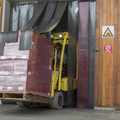
A dock is the simplest receiving arrangement. The trailer backs up, pallets come off with a forklift or pallet jack, and the merchandise is on the floor in an hour or two. Without a dock, a liftgate delivery works but is slower and carriers often bill extra for it.
Floor space has to accommodate twenty-plus pallets on arrival and considerably more once they are broken down. Buyers routinely underestimate the second number.
Labor to process a truckload of general merchandise is days for a small team and weeks for one person. Apparel takes longer. Plan it before the trailer arrives.
Cash to carry the inventory until it sells. A truckload is a large purchase of merchandise that has not sold yet, and a buyer who needs it to sell immediately to fund the next purchase is not ready.
A channel that has already proven it absorbs several pallets a month consistently. This is the one most buyers skip, and it is the one that matters most.
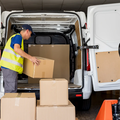
For buyers within driving distance of the supplier, picking up with a buyer-supplied trailer is simplest. The buyer controls timing, sees the load being built, and avoids freight.
For buyers further away, the supplier either arranges freight or hands off a carrier contact. Full truckload freight means the trailer carries only your load, which keeps handling minimal and timing predictable. A buyer should confirm the load is built before booking a carrier and have receiving ready when it arrives. The guide to suppliers that ship to the East Coast covers the Atlantic corridor specifically.
For exporters, the truckload moves to a freight forwarder or the port for container consolidation, and the supplier's experience with export preparation and customs documentation matters. The guide to liquidation truckloads in Florida, picking up versus shipping covers each of these paths in detail.
Almost nobody should go from a single pallet to a truckload in one step. The usual path runs through partial loads, which most suppliers will build at five to twelve pallets.
Buy pallets until a load type is selling through predictably. Then buy a partial load of the same type and see how receiving, processing, and selling hold up at that scale. Run two or three partial loads. Then move to a full truckload.
Each step is small enough to recover from if it goes differently than planned. A buyer who takes this path arrives at truckload buying with no surprises. A buyer who jumps gets the surprises all at once.
A supplier who handles pallets, partial loads, and truckloads from the same floor makes the path simple, because the relationship carries through every stage. The guide to wholesale liquidation truckloads and pallets across North America describes how buyers at each scale operate.
Condition type matters as much at truckload scale as at pallet scale, with the stakes multiplied. A return truckload means twenty-plus pallets that each need sorting and grading. An overstock truckload moves to the shelf far faster. The guide to how to buy truckload returns covers the return format specifically, and the guide to truckload surplus and closeout suppliers covers the overstock side.
A first truckload is usually best as overstock, for the same reason a first pallet is. Learning to move volume comes before learning to grade volume.
Receiving is only the beginning. A truckload on the floor is cash and space tied up until it becomes sellable inventory, and the buyers who do well at this scale have a process that gets merchandise moving within days.
Set up zones before the trailer arrives. Designate floor areas by category or by destination, so that as each pallet is broken down the contents go somewhere specific rather than into a general pile.
Work pallet by pallet rather than opening everything at once. A truckload opened all at once becomes a warehouse-sized sorting job with nowhere to walk. One pallet at a time keeps the floor usable.
Grade as you go if the load is returns. Separate new, open-box, used, and damaged as each item comes off, and route anything unsellable out immediately.
Rebuild for the channel. Wholesalers rebuild sorted pallets for resale. Storefronts route to shelves and bins. Online sellers inventory and list. Exporters consolidate onto outbound pallets for the container.
Track velocity. Note how long the truckload takes to process and how fast each category sells through. That data decides whether the next truckload should be the same type, a different mix, or a partial load instead.
A small team can process a general merchandise truckload in a few days this way. One person working alone should expect weeks, which is a reason to build labor into the plan before buying.
Ask how loads are built and whether they can be built to specification.
Ask what is currently available and get a direct answer.
Ask about freight. Do they arrange it, coordinate with your carrier, or expect you to handle it entirely?
Ask about the lane. A supplier who ships your corridor regularly knows what to expect.
Ask about export preparation if you consolidate containers.
Ask whether they handle pallets and partial loads too. A supplier who does lets you take the gradual path.
Visit if you can. A truckload is a large purchase and seeing the operation that builds it is worth the trip.
TDW Closeouts operates from Sunrise, Florida, and supplies truckloads of general merchandise, apparel, home goods, tools, housewares, seasonal, and retailer-specific loads from Amazon, Target, Walmart, Home Depot, department stores, and other sources, in overstock, return, and mixed formats. The company can discuss load composition with the buyer and handles pallets and partial loads from the same floor, so a buyer can take the gradual path with one supplier.
Local buyers pick up at the Sunrise dock with their own trailers. Buyers across Florida and up the East Coast ship along the Atlantic corridor with freight arranged or coordinated. Exporters receive customs assistance through the company's export and customs service. A buyer who started with a single pallet keeps the same point of contact at truckload scale, and that contact can say which truckloads are built and ready before any freight is booked.
Website: TDW Closeouts: The Discount Warehouse
Call: 1-954-746-8000
Truckload liquidation is the efficient way to source merchandise once a channel has proven it can absorb volume. The merchandise is the same as at pallet scale. The requirements are a dock or alternative, space, labor, cash, and a channel that has already demonstrated demand. Buyers who have those pieces find truckloads consistent and manageable. Buyers who do not should build them, one pallet and one partial load at a time, with a supplier who will still be there when they are ready.
This article is provided for informational and entertainment purposes only. Any companies mentioned are not ranked in any particular order, and inclusion does not constitute an endorsement. Readers should conduct their own research and due diligence before selecting a supplier or making any purchasing decision.
 Export
  All
All  Department
  Pallet