Office Hours: M-F 9AM-6PM US Eastern

Where Passion Meets Profit
Where Passion Meets Profit
Where Passion Meets Profit
Blog post by TDW Closeouts on 1-Oct-2026 at 4:54pm Eastern Time
A Walmart truckload is a different animal from a Walmart pallet. The merchandise is the same, drawn from the same returns and overstock streams, but the scale changes everything about how a buyer has to operate. Receiving a trailer of general merchandise means a dock or a liftgate, floor space for twenty-plus pallets, labor to process it, and a channel that can absorb the volume before the next load arrives. Buyers who move to truckloads with those pieces in place find the efficiency and the consistency worth it. Buyers who move without them spend the next quarter managing a pile.
The sections below cover what a Walmart truckload actually contains, how loads are built, what receiving and processing involve, and how to tell whether you are ready. TDW Closeouts supplies Walmart truckloads from its warehouse in Sunrise, Florida, and the Walmart truckload liquidation overview describes how those loads are organized.
For buyers still at pallet scale, the guide to buying Walmart liquidation pallets in Florida covers the earlier stage. This article picks up where that one leaves off.
A truckload is a full trailer, typically somewhere between twenty and twenty-six pallets depending on how the load is built and what the merchandise is. Walmart truckloads are usually sorted by load type, so a buyer receives a trailer of a defined format rather than a random assortment.
General merchandise truckloads are the most common. They carry Walmart's broad assortment across household, kitchen, personal care, toys, small electronics, automotive accessories, pet, and general consumer goods. The Walmart general merchandise loads listing shows how one is described at the pallet level, and a truckload is that format multiplied.
Category truckloads are sorted by department. Apparel, footwear, home, seasonal, furniture, and toys each appear as truckload formats. These suit buyers with a channel built around the category.
Walmart.com truckloads come from online returns and skew toward boxed, shippable items.
Jumbo and mixed loads combine larger items or several categories and suit buyers with space and a broad channel.
Within any of these, the load will be either returns, overstock, or a mix, and the condition profile follows accordingly. A buyer should know which they are receiving.
Wholesalers who break loads down into pallets and case lots for smaller resellers are a large part of the market. They buy at truckload scale because that is where consistent supply lives, and they resell to the flea market vendors and storefronts who cannot take a trailer.
Exporters consolidating containers for Latin America, the Caribbean, and other markets buy Walmart truckloads because the merchandise is recognizable abroad and the volume fills containers efficiently. South Florida has a large concentration of these buyers, and the guide to wholesale liquidators exporting to Latin America covers how they operate.
Multi-location retailers and bin store operators supplying several storefronts buy truckloads to stock all of them from one purchase.
High-volume online sellers with warehouse space and processing staff buy truckloads of Walmart.com or category loads to keep listings stocked.
What these buyers share is a channel that absorbs volume predictably. That is the qualification, more than capital or ambition.
Receiving is where new truckload buyers most often get into trouble, because a trailer arrives all at once and has to go somewhere.
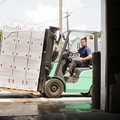
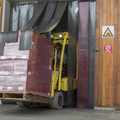
A loading dock is the simplest arrangement. The trailer backs up, pallets come off with a forklift or pallet jack, and the merchandise is on your floor within an hour or two.
Without a dock, a liftgate delivery can work, but it is slower and the carrier may charge for it. Each pallet comes down individually and has to be moved from the curb.
Floor space is the next constraint. Twenty-plus pallets occupy a substantial footprint even before they are broken down, and breaking them down expands the footprint considerably. A buyer should walk their space and measure before ordering, not after.
Labor is the third. Processing a truckload of general merchandise means unpacking, sorting, grading if it is returns, and organizing every pallet. For one person that is weeks. For a small team it is days. Plan the labor before the trailer arrives.
For buyers who want to understand how truckload buying works across retailers, the truckload liquidation websites and suppliers guide covers the format broadly, and the guide to how to buy truckload returns goes into the return format specifically.
Once a Walmart truckload is on the floor, the work is turning it into sellable inventory. The approach depends on load type.
General merchandise gets sorted by category and, if returns, by condition. Most buyers set up zones on the floor and work pallet by pallet, routing items to the zone where they belong. From there, merchandise goes to shelves, bins, listings, or outbound pallets for resale.
Apparel gets sorted by department, size, and condition, then organized for whatever channel it is headed to. This is the most labor-intensive format per unit.
Boxed Walmart.com merchandise gets inventoried and listed, with testing for anything electronic.
Wholesalers reselling to smaller buyers typically rebuild pallets by category and sell them as sorted loads, which is a service the smaller buyer values and pays for.
Throughout, the goal is velocity. A truckload that sits unprocessed is tying up cash and space. Buyers who do well at this scale have a process that gets merchandise moving within days of arrival.
Many buyers who are not quite ready for a full trailer are more than ready for a partial load, and most suppliers will build one. A partial load is typically somewhere between five and twelve pallets, shipped or picked up together, and it functions as a middle step between pallet buying and truckload buying.
The partial load has several advantages for a buyer in transition. It tests whether your receiving arrangement actually works before you commit to a full trailer. It shows you how your processing labor holds up at a larger scale. It lets you see whether your channel absorbs a larger volume of the same load type at the pace you expected. And it keeps the downside manageable if any of those turn out differently than planned.
Buyers who run two or three partial loads successfully almost always move to full truckloads smoothly, because by then there are no surprises left. Buyers who jump from a single pallet to a full trailer sometimes find the surprises all at once.
A supplier who handles pallets, partial loads, and full truckloads from the same floor makes this progression easy, because you are not negotiating with a new source at each step.
Ask four questions. Does your channel sell through several pallets a month consistently? Do you have a dock or a workable liftgate arrangement and the floor space for a full trailer? Can you carry the inventory for the time it takes to sell through? And have you processed enough Walmart pallets to know how the load type performs in your channel?
Four yes answers mean you are ready. Three mean buy a partial load first. Fewer than three means stay at pallet scale a while longer. The guide to liquidation truckloads for beginners covers the full process for buyers making that step.
The broader guide to wholesale liquidation truckloads and pallets across North America describes how buyers at each scale typically operate, and the truckloads section at a wholesale warehouse shows current truckload formats across retailers.
TDW Closeouts operates from Sunrise, Florida, and supplies Walmart truckloads in general merchandise, category, Walmart.com, and mixed formats, alongside truckloads from Target, Amazon, Home Depot, department stores, and other sources. The company can discuss load composition with the buyer and coordinates freight or dock pickup depending on the buyer's location.
For South Florida buyers, pickup at the Sunrise dock is straightforward. For buyers elsewhere on the East Coast, the warehouse sits at the southern end of the Atlantic freight corridor. For exporters, the company prepares truckloads for container consolidation and provides customs assistance through its export and customs service.
Buyers moving from pallets to truckloads keep the same point of contact, which matters because the relationship built at pallet scale is what makes truckload buying feel manageable rather than risky. Before a buyer books a trailer, the team will walk through which Walmart truckloads are built and what each one holds.
Website: TDW Closeouts: The Discount Warehouse
Call: 1-954-746-8000
Walmart truckload liquidation is where resellers go when their channel has outgrown pallets. The merchandise is the same, the sourcing is more efficient, and the consistency is what makes planning possible. The requirements are a dock or workable alternative, floor space, labor, cash to carry inventory, and a channel that has already proven it absorbs volume.
Buyers who have those pieces in place find truckloads to be the most efficient way to source Walmart merchandise. Buyers who do not should build them first, one pallet at a time.
This article is provided for informational and entertainment purposes only. Any companies mentioned are not ranked in any particular order, and inclusion does not constitute an endorsement. Readers should conduct their own research and due diligence before selecting a supplier or making any purchasing decision.
 Export
  All
All  Department
  Pallet