Office Hours: M-F 9AM-6PM US Eastern
Where Passion Meets Profit
Where Passion Meets Profit
Where Passion Meets Profit
Blog post by TDW Closeouts on 1-Oct-2026 at 1:34pm Eastern Time
The phrase "Amazon liquidation store" gets searched constantly, and it means different things to different people. Some searchers are looking for a retail outlet where they can buy returned items one at a time. Others are resellers looking for a warehouse that sells Amazon merchandise by the pallet. A few are trying to figure out whether Amazon itself runs such stores. The answers to those three questions are different, and confusing them leads buyers to the wrong places.
This guide is for the second group, the bulk buyers. It explains what an Amazon liquidation store actually is in the wholesale sense, how merchandise gets there, what you will find inside, and how resellers use one as part of a sourcing strategy. TDW Closeouts operates one such source from its warehouse in Sunrise, Florida, serving buyers across South Florida and beyond, and the Amazon liquidation store Miami page describes that operation specifically.
The short version is that an Amazon liquidation store, in the wholesale sense, is a warehouse that buys Amazon surplus and returns in bulk and sells it to resellers by the pallet or truckload. The longer version is more useful.
Retail bin stores and outlet shops sell Amazon return items individually to the public, often restocking on a weekly cycle that regular customers learn to follow. These are retail businesses. They buy pallets from wholesale sources and sell units to walk-in customers. If you are a reseller, these are your competitors or your customers, not your supplier.
Amazon's own programs include auction platforms and partner marketplaces where Amazon sells surplus directly to registered business buyers. These are real, but they are online, they require business registration, and the loads ship from Amazon facilities rather than from a local store. They do not constitute a store you can visit. The guide to top liquidation websites for bulk buyers covers those online platforms and how they compare.
Wholesale liquidation warehouses are the third meaning, and the one that matters for bulk buyers. These are independent companies that buy Amazon merchandise in volume and resell it to businesses. They hold inventory, they load at a dock, and they sell by the pallet and truckload. When a reseller searches for an Amazon liquidation store near them, this is what they are actually looking for.
The guide to Amazon liquidation warehouse locations covers where these operations tend to be concentrated and why.
Amazon processes a vast volume of customer returns, along with overstock, shelf pulls, discontinued items, and products with damaged packaging. Returning all of it to the shelf is not practical, so Amazon sells it in bulk through liquidation channels.
That merchandise moves through a chain. Large liquidators and auction platforms buy directly from Amazon in truckload and container volumes. Regional warehouses buy from those sources or through their own relationships, then break the volume into pallets and smaller truckloads for resale. By the time a reseller buys a pallet from a local warehouse, the merchandise may have passed through two or three hands.
That chain explains why local warehouses differ so much. Some have direct, consistent sourcing and receive Amazon merchandise steadily. Others buy opportunistically and have it some weeks and not others. The liquidation warehouses across the United States guide covers how to tell the two apart, and the difference is the single most important thing about a supplier.
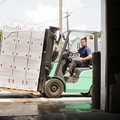
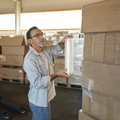
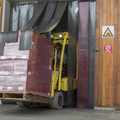
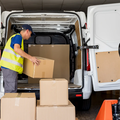
Walk into a wholesale Amazon liquidation store and the floor will be organized by load type rather than by product. Expect to see several formats.
Mixed general merchandise pallets are the staple. These contain assorted consumer goods across household, personal care, kitchen, toys, small electronics, pet supplies, and whatever else Amazon moves in volume. They suit general resellers and booth operators.
Category loads are sorted by department. Apparel, footwear, tools, health and personal care, and home goods are common. These suit buyers with a defined channel.
Smalls loads contain compact items, frequently still in Amazon packaging, and suit online sellers shipping individual units. The Amazon HPC smalls loads format is one example of how a health and personal care smalls load is composed, and the guide to Amazon HPC pallets goes deeper on that format.
Return pallets and overstock pallets differ by condition mix. Returns include opened and used items alongside new ones. Overstock skews toward new condition. A warehouse that carries both will usually label them clearly because buyers want different things from each.
Many warehouses also carry merchandise from other retailers on the same floor. A buyer visiting for Amazon loads will often find Target, Walmart, Home Depot, and department store merchandise nearby, which is useful for anyone selling across categories. The Amazon department store section at TDW Closeouts sits alongside sections for each of those retailers.
The most common pattern is the anchor relationship. A reseller finds a warehouse within driving distance, buys a pallet to test, and if the merchandise performs, returns on a regular schedule. Over time the supplier learns what the buyer sells and flags suitable loads when they arrive. This is the model many established small resellers run, because it removes freight, lets them inspect before buying, and builds a relationship that improves outcomes over time.
A second pattern is the supplement. Buyers who source mostly online use a local warehouse to fill gaps, test new categories, or restock quickly when something sells faster than expected. The warehouse is not the primary source but it makes the primary source work better.
A third pattern is export consolidation. South Florida in particular has many buyers shipping to Latin America and the Caribbean, and they use local warehouses to build container loads from Amazon merchandise, often mixed with other retail sources. This group buys at truckload scale and values suppliers who understand customs paperwork. The guide to Amazon truckload liquidation companies covers who serves that scale.
Whichever pattern fits, the practical advice is the same. Call before you drive, test with one pallet, process it completely before buying the next, and build toward volume once the merchandise has proven itself in your channel. The guide to Amazon liquidation pallets in Miami walks through that process for South Florida buyers specifically.
A warehouse two states away and a warehouse twenty minutes away might carry identical Amazon loads, and they are still not equivalent options. Distance changes everything about how you buy.
With a nearby warehouse, you can inspect before committing, pick up on your own schedule, test one pallet at a time, and return mid-week when something sells out. Freight disappears from the calculation. Mistakes are small because each purchase is small.
With a distant warehouse, you commit before seeing the merchandise, you pay to move it, and you buy in larger quantities to make the shipping worthwhile. Mistakes are larger because each purchase is larger. None of that makes distant sourcing wrong, but it does make it a different business, better suited to experienced buyers with established channels.
This is why resellers in South Florida have a structural advantage. The density of Amazon liquidation inventory in the region means many buyers can find a warehouse within an hour's drive, and the guide to Amazon wholesale liquidation in Florida explains how that regional market is organized.
How often does Amazon merchandise arrive? A warehouse with consistent sourcing will answer with a pattern. One without it will answer vaguely.
What load types do you carry? Mixed, sorted, smalls, returns, overstock. The answer tells you whether the warehouse fits your channel.
Can you tell me what is on the floor right now? A direct answer, including a clear no, is a good sign. A vague answer means nobody has looked.
What are your dock hours and pickup arrangements? This determines whether the warehouse is practical for you at all.
Do you handle pallets and truckloads? A warehouse that does both lets you scale without changing suppliers.
Do you work with export buyers? Relevant for anyone consolidating containers, and the answer reveals how the warehouse prepares loads generally.
TDW Closeouts runs a wholesale liquidation warehouse in Sunrise, Florida, and Amazon merchandise is a consistent part of the floor. The operation carries mixed general merchandise, category-sorted loads, smalls, and return and overstock formats, alongside merchandise from Target, Walmart, Home Depot, department stores, and other retail sources.
The company serves buyers at every scale, from a flea market vendor picking up a single pallet to an exporter filling truckloads for container consolidation. Buyers can call ahead to confirm what is on the floor, pick up at the dock or arrange delivery, and scale from pallets to truckloads with the same point of contact. Export customers receive customs assistance through the company's established process.
For South Florida resellers, the warehouse functions as the kind of anchor source described above, close enough to visit, consistent enough to plan around, and direct enough to trust when asking what is available.
Website: TDW Closeouts: The Discount Warehouse
Call: 1-954-746-8000
An Amazon liquidation store, for a bulk buyer, is a warehouse that holds Amazon merchandise and sells it by the pallet and truckload. The valuable ones have consistent sourcing, clear load types, direct communication, and practical logistics. The rest are worth a look but not a plan.
Find one you can reach, test it with a pallet, and build from there. The relationship is worth more than any single load.
This article is provided for informational and entertainment purposes only. Any companies mentioned are not ranked in any particular order, and inclusion does not constitute an endorsement. Readers should conduct their own research and due diligence before selecting a supplier or making any purchasing decision.
 Export
  All
All  Department
  Pallet