Office Hours: M-F 9AM-6PM US Eastern

Where Passion Meets Profit
Where Passion Meets Profit
Where Passion Meets Profit
Blog post by TDW Closeouts on 1-Oct-2026 at 5:39pm Eastern Time
The phrase "wholesale liquidation pallets" covers a market that most people outside it never see. Retailers move enormous volumes of merchandise that leaves the sales floor without being sold to a customer, or that comes back after it was. That merchandise does not disappear. It is consolidated, sorted, built onto pallets, and sold to businesses that resell it through flea markets, discount stores, online shops, and export channels around the world.
What follows explains the market from the ground up. It covers where liquidation pallets come from, how they are sorted and described, the main load types a buyer will encounter, who buys them and why, how a purchase actually works, and how to approach the market as a new buyer. TDW Closeouts sells wholesale liquidation pallets from its warehouse in Sunrise, Florida, and the company's pallets section shows how inventory is organized at a wholesale warehouse. The guide to wholesale pallet liquidation suppliers for bulk buyers covers the supplier landscape.
Every large retailer accumulates merchandise it cannot keep on the floor. Customer returns are one of the largest streams. Overstock from seasonal transitions and overbuying is the second. Shelf pulls when planograms change, discontinued product lines, damaged packaging, and store closures all add to it.
Retailers consolidate this merchandise and sell it in bulk, usually by the truckload or container, to liquidation companies. Those companies sort it, build it onto pallets, and sell the pallets to resellers. Some retailers run their own liquidation programs that sell directly to registered business buyers, and some merchandise moves through more than one liquidator before reaching a reseller.
By the time a pallet is on a warehouse floor, it typically carries a description of its source retailer, its department or category, and its condition type. That description is what a buyer uses to decide whether the pallet fits their channel.
The guide to liquidation warehouses across the United States describes how the warehouse layer of the market operates.
Three dimensions describe almost every liquidation pallet.
Source identifies the retailer. Amazon, Target, Walmart, Home Depot, department stores, drugstores, and off-price retailers each produce distinctive merchandise, and the source tells a buyer what to expect.
Category identifies the department. General merchandise is the mixed format. Apparel, home goods, tools and hardware, toys, health and beauty, housewares, electronics, furniture, and seasonal are the common sorted categories.
Condition identifies what happened to the merchandise before it was liquidated. Overstock and shelf pulls were never sold to a customer and are mostly new. Returns came back from customers and mix new, opened, used, and damaged. Mixed loads combine the two. Salvage describes merchandise with known damage.
A pallet described as Target general merchandise overstock, for example, tells a buyer the retailer, the mix, and the condition in three words.
General merchandise pallets mix categories from a single retailer and are the most common format. They suit flea market vendors, discount storefronts, and general resellers who sell variety.
Category pallets sort by department and suit buyers with a defined channel. A clothing reseller buys apparel pallets. A tool seller buys hardware pallets.
Retailer-specific pallets are organized by source and suit buyers whose customers follow particular retailers' merchandise.
Smalls pallets carry compact, boxed items and suit online sellers shipping individual units.
Bulk and case pack formats carry multiples of the same item and suit wholesalers and exporters.
Credential and used merchandise, mostly clothing, comes from donation streams rather than retail and is sold by the bale or gaylord.
The guide to wholesale liquidation truckloads and pallets across North America describes how these formats are distributed across the continent's suppliers.
Flea market and swap meet vendors are among the most numerous buyers. They buy one to a few pallets at a time, usually general merchandise or apparel, and restock on a weekly or biweekly rhythm.
Discount storefronts and bin stores buy several pallets to a partial load at a time to keep shelves and bins stocked.
Online sellers buy boxed, sorted merchandise and list individual units on marketplaces.
Exporters buy at truckload scale and consolidate containers for markets abroad, particularly Latin America and the Caribbean from South Florida.
Wholesalers and distributors buy truckloads and break them into pallets for smaller resellers.
Non-profits and community organizations buy bulk merchandise for distribution.
Each group values something different. Vendors value proximity and variety. Storefronts value consistency. Online sellers value sorted, shippable loads. Exporters value volume and recognizable brands. Wholesalers value steady supply.
A buyer identifies a source, usually a wholesale warehouse or an online marketplace. At a warehouse, the buyer calls or visits, asks what is on the floor, selects a pallet or several, pays, and either picks up at the dock or arranges delivery. At a marketplace, the buyer reviews listings, bids or buys, and arranges freight from wherever the seller is. The guide to top liquidation websites for bulk buyers covers the established platforms.
Most wholesale warehouses sell to businesses and may ask for a resale certificate or business documentation. This is routine.
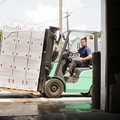
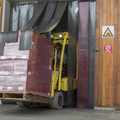
Pickup requires a vehicle that can take a pallet. A pickup truck handles one, a van one or two, a box truck or trailer several. Delivery is available from most warehouses for buyers who cannot collect.
Once the pallet is home, the buyer unwraps it, sorts and grades the contents, tests anything electronic, removes what cannot be sold, and organizes the rest for their channel.
The guide to wholesale pallet suppliers for resellers covers how to evaluate a supplier before the first purchase.
Decide what you sell and where. The load type follows from the channel.
Find a source you can reach. A warehouse within driving distance removes freight, allows inspection, and supports a relationship. The guide to where to buy pallets of merchandise covers how to evaluate sources. If none exists, find a supplier who ships to your region regularly.
Buy one overstock pallet in a category that fits your channel. Process it completely. Track results.
Return to the same source for the second one. The relationship is where the long-term value is.
Scale when the channel absorbs pallets predictably. Partial loads come before truckloads, and the guide to liquidation truckloads for beginners covers that step.
Keep a secondary source for category gaps, but anchor on one.
Beyond the source, category, and condition labels covered above, a handful of other words show up on warehouse floors and in load descriptions.
Closeouts are product lines a seller has discontinued and is clearing in bulk. They are new, often uniform, and frequently come in case quantities. The guide to wholesale clearance and closeout suppliers covers that format in depth.
Salvage is merchandise with known damage, sold for parts, repair, or as-is resale, and it is a different purchase from returns.
Case packs are multiples of a single item in original cartons, common in closeouts and bulk loads.
Gaylords are the large cardboard bins used for bulk or credential merchandise instead of a shrink-wrapped pallet.
Partial loads are groups of pallets, usually five to twelve, sold together as a step between single pallets and full truckloads.
A buyer who can read a load description with these terms in mind asks better questions and makes fewer surprised purchases.
The warehouse is the layer of the market where merchandise becomes accessible to small buyers. Retailers sell by the truckload and container. Resellers buy by the pallet. The warehouse is what connects those two scales, and the quality of the warehouse determines the quality of the buyer's experience.
A warehouse with consistent retail sourcing, broad category range, direct communication, and practical logistics is an asset a reseller can build a business on. A warehouse without those things is a place to find an occasional load. The guide to warehouse liquidation companies covers how to tell the two apart.
TDW Closeouts runs a wholesale liquidation warehouse in Sunrise, Florida, with established sourcing from Amazon, Target, Walmart, Home Depot, department stores, drugstores, and other retailers. The floor carries general merchandise, apparel, home goods, tools, housewares, seasonal, health and beauty, and category-sorted loads in overstock, return, and mixed formats.
The company sells from a single pallet through full truckloads to every buyer type described above. Local buyers pick up at the dock Monday through Friday. Buyers across Florida and the East Coast arrange delivery. Exporters consolidating containers receive customs assistance. A buyer who grows from one pallet to truckload volume keeps the same point of contact throughout, and that contact will say plainly what is in the building on any given day.
Website: TDW Closeouts: The Discount Warehouse
Call: 1-954-746-8000
Wholesale liquidation pallets are the mechanism by which retail surplus becomes inventory for small businesses. The market is large, the merchandise is varied, and the structure is simpler than the search results make it look. Retailers sell in bulk, warehouses sort and build pallets, resellers buy and sell through their channels.
Understand the three dimensions of a pallet description, find a warehouse you can reach, buy one overstock pallet, and build from there. The market rewards buyers who approach it with method.
This article is provided for informational and entertainment purposes only. Any companies mentioned are not ranked in any particular order, and inclusion does not constitute an endorsement. Readers should conduct their own research and due diligence before selecting a supplier or making any purchasing decision.
 Export
  All
All  Department
  Pallet